
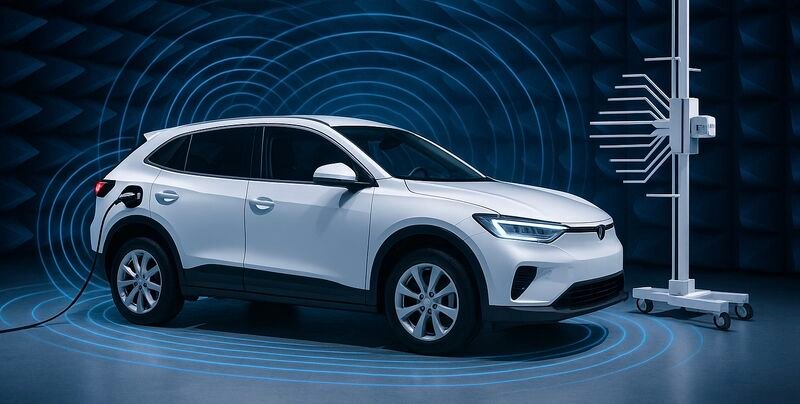
Navigating the Complexities of Electromagnetic Compatibility (EMC) Testing in Electric Vehicles: In the fast-evolving landscape of electric and hybrid vehicle engineering, Electromagnetic Compatibility (EMC) remains a critical focus area. However, many professionals in the field often overlook the complexities involved not just with the Device Under Test (DUT), but also within the test setup itself. Why does this matter? 1. The Test Setup as a Variable: EMC failures can frequently arise from deficiencies in the test configuration rather than issues with the DUT. Factors such as grounding methods, shielding effectiveness, and signal integrity in the test environment can greatly influence the results. A misconfigured setup can yield misleading data, leading to unnecessary rework and project delays. 2. Understanding Standards: Comprehensive knowledge of EMC standards like ECE-R10 and CISPR is essential. These standards not only dictate the acceptable limits for emissions but also outline procedures for testing and setup. Engineers must delve deeply into these requirements to ensure compliance while accurately reflecting real-world conditions during testing. 3. System-Level Perspective: EMC is not merely a checkbox on a compliance list; it’s an integral part of system architecture. A thorough understanding of how various components (e.g., inverters, control units) interact within the broader system is crucial. This requires a holistic approach one that considers both the hardware and the test methodology. As we continue to innovate in electric mobility, let’s ensure that we’re not just focusing on the DUT but are also critically evaluating our test setups. Proper attention to these details can drive significant improvements in reliability and performance. What challenges have you faced in EMC testing? Let’s exchange insights and enhance our collective understanding of this vital aspect of automotive engineering! #ElectromagneticCompatibility #EMC #ElectricVehicles #SystemsEngineering #AutomotiveStandards #Compliance #EngineeringExcellence #eMobility #PowerElectronics