
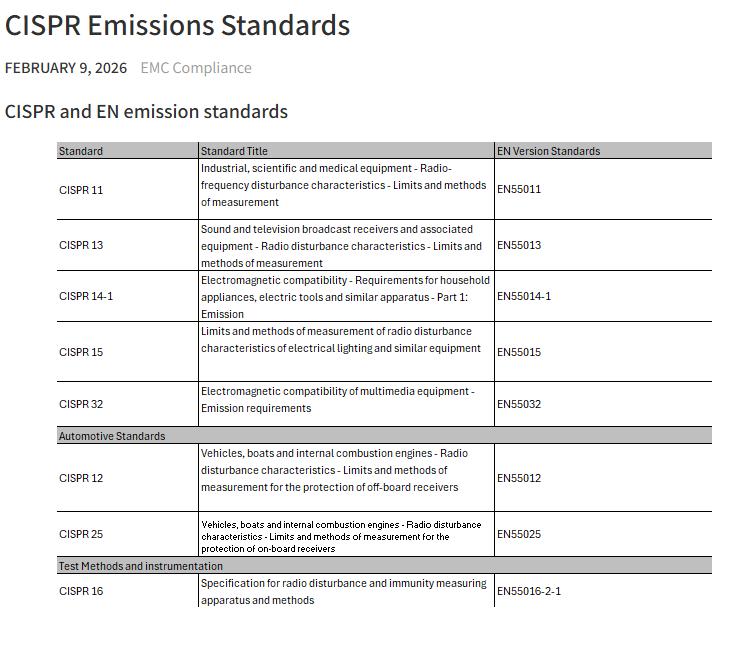
CISPR is the acronym for the French title of the International Special Committee on Radio Interference. CISPR is a committee of the IEC and is responsible for all international radio frequency emissions standards; its publications are also used as European standards to support the EMC, R&TTE and Automotive EMC Directives.
CISPR emissions standards are recipes for testing particular types of product, along with limits to apply to the results of those tests. The typical content is:
Scope
Requirements (Limit lines for each test)
How to test (Layout, Method, Equipment and so on)
Conformity Assessment
Scope
The scope is a critical part of a standard as it defines as clearly as possible what type of equipment the standard should apply to. The scope can be found at the beginning of the standard. CISPR 11, 14-1 and 32 are applied much more widely than their scope allows, through references in other product and generic standards.
Testing Instructions
The test specification will show the frequency ranges and methods of testing to be used, this includes test layout and instrumentation. Equipment shall be operated and configured to ensure that it will maximise all emissions and disturbances.
Limits
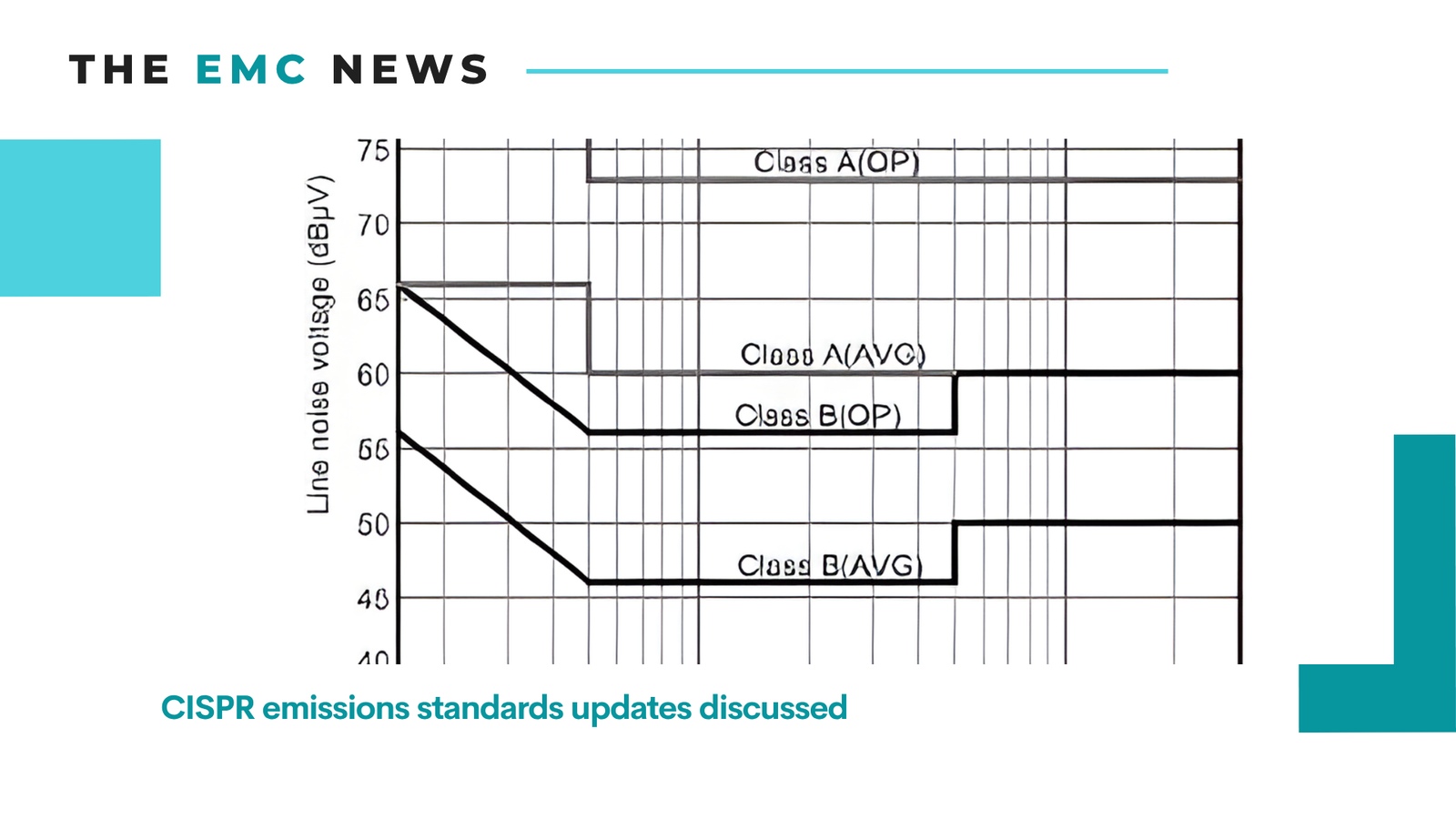
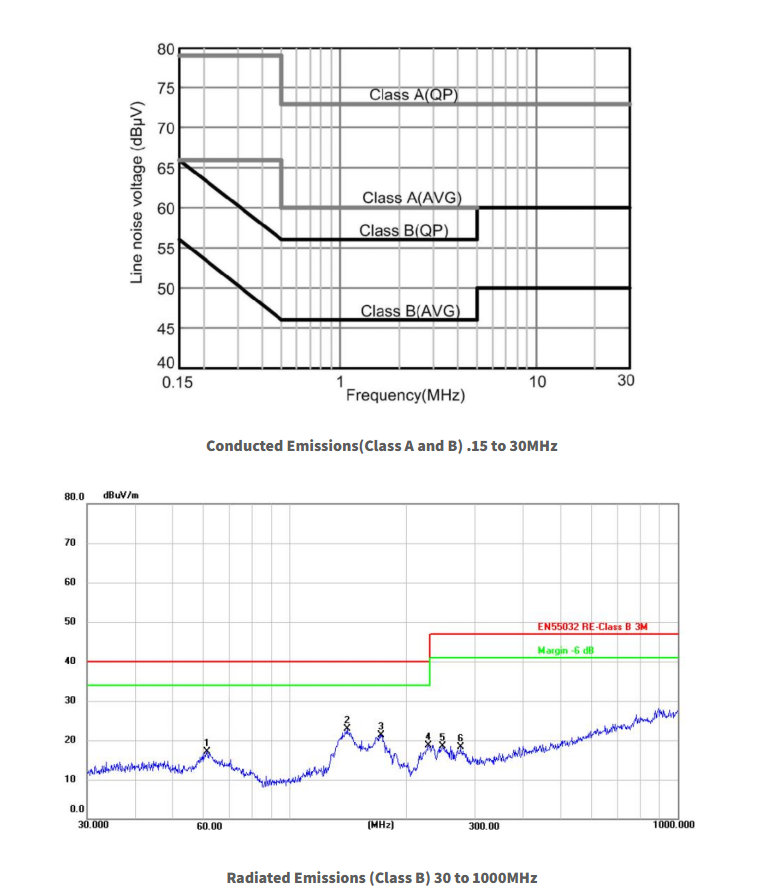
Each standard has different limit lines, but they all have two different classes “Class A” and “Class B”, these are determined for the environment the equipment is intended for i.e. Class A industrial and Class B light industrial/Residential. We have placed plots below for conducted and radiated emissions to CIPR32 (EN55032).
Conformity Assessment
Compliance for mass produced products with an emission standard does not mean all products must emit less than the limit. The requirements for mass production is that 80% of units will comply with the limit at an 80% confidence level. The recommended minimum number of samples is five but in exceptional circumstances a sample of three or four is acceptable.