
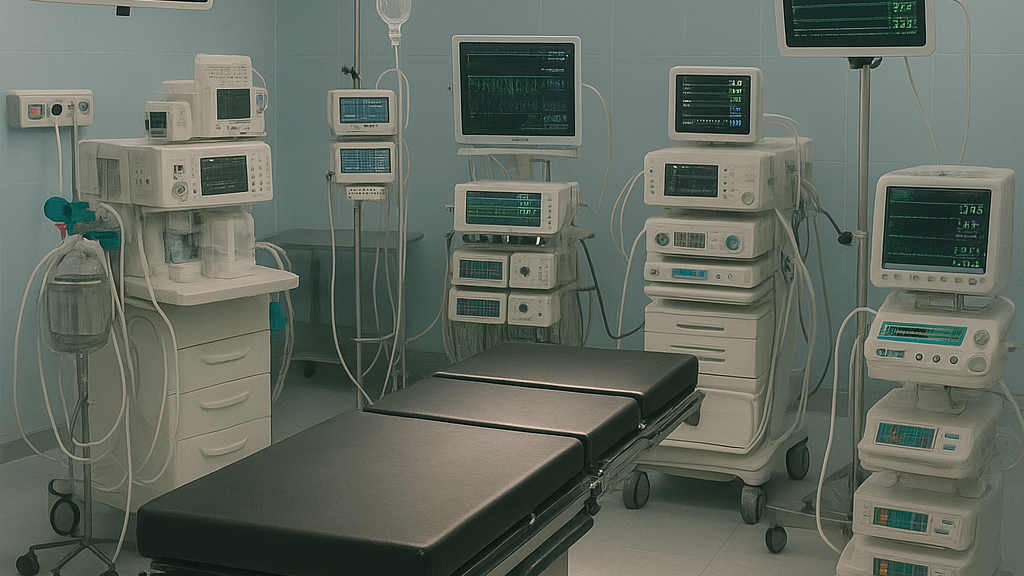
For medical electrical equipment, safety isn’t just about insulation or construction—it’s also about how your product behaves electromagnetically in the real world.
That’s where IEC 60601-1-2 comes in. This collateral standard sets the electromagnetic compatibility (EMC) requirements to ensure your device performs safely and reliably in today’s high-interference environments.
Let’s break it down. 👇
⚙️ What Is IEC 60601-1-2?
IEC 60601-1-2 is part of the broader IEC 60601 family, specifically covering EMC requirements for medical electrical equipment. It addresses:
• Emissions: The unintentional electromagnetic noise your device may generate
• Immunity: How your device withstands electromagnetic interference (EMI) from external sources
• Test environments: Simulating real-world hospital, clinic, or home-use conditions
📌 Note: This standard complements—not replaces—other safety requirements under IEC 60601-1, such as electrical shock protection, mechanical safety, and essential performance.
💡 Key Design & Testing Considerations
📡 Managing Radiated & Conducted Emissions
• Minimize emissions from switching power supplies, digital clocks, and RF circuits
• Shield enclosures and cables early in the design
• Filter I/O lines and use proper grounding strategies
⚡ Preparing for Immunity Events Your device must maintain essential performance during: •
• ESD (Electrostatic Discharge)
• EFT (Electrical Fast Transients)
• Surges and radiated/conducted RF fields
These simulate common disruptions in clinical settings—like power switching or static shocks from operators.
📶 Why the Wide Frequency Range?
EMC testing may span from 150 kHz to 2.7 GHz or higher, depending on:
• Operating frequency of your device
• Presence of wireless functions (Wi-Fi, Bluetooth, LTE)
• Applicable regulatory expectations (e.g., FCC, RED, CISPR 11)
🔌 Ports, Cables & Configurations Matter
• Number and type of ports (power, Ethernet, USB, etc.)
• Cable length and shielding
• Operating modes—all must be tested for both emissions and immunity
📄 Don’t Forget Documentation Test results, performance under stress, and risk analysis must all be documented as part of your technical file—especially for CE marking and regulatory audits.
📩 Preparing for EMC testing on a medical device? QAI helps manufacturers meet IEC 60601-1-2 requirements with pre-compliance evaluations, formal testing, reporting, certification, and documentation support—all under ISO/IEC 17025 accreditation. 🌐 www.qai.org | QAI Laboratories
📌 Disclaimer: This post is for educational purposes only. Always consult the applicable standards and a qualified certification body for your product’s specific requirements. Images and videos are for illustration purposes only and do not depict actual testing processes or real world scenarios.