
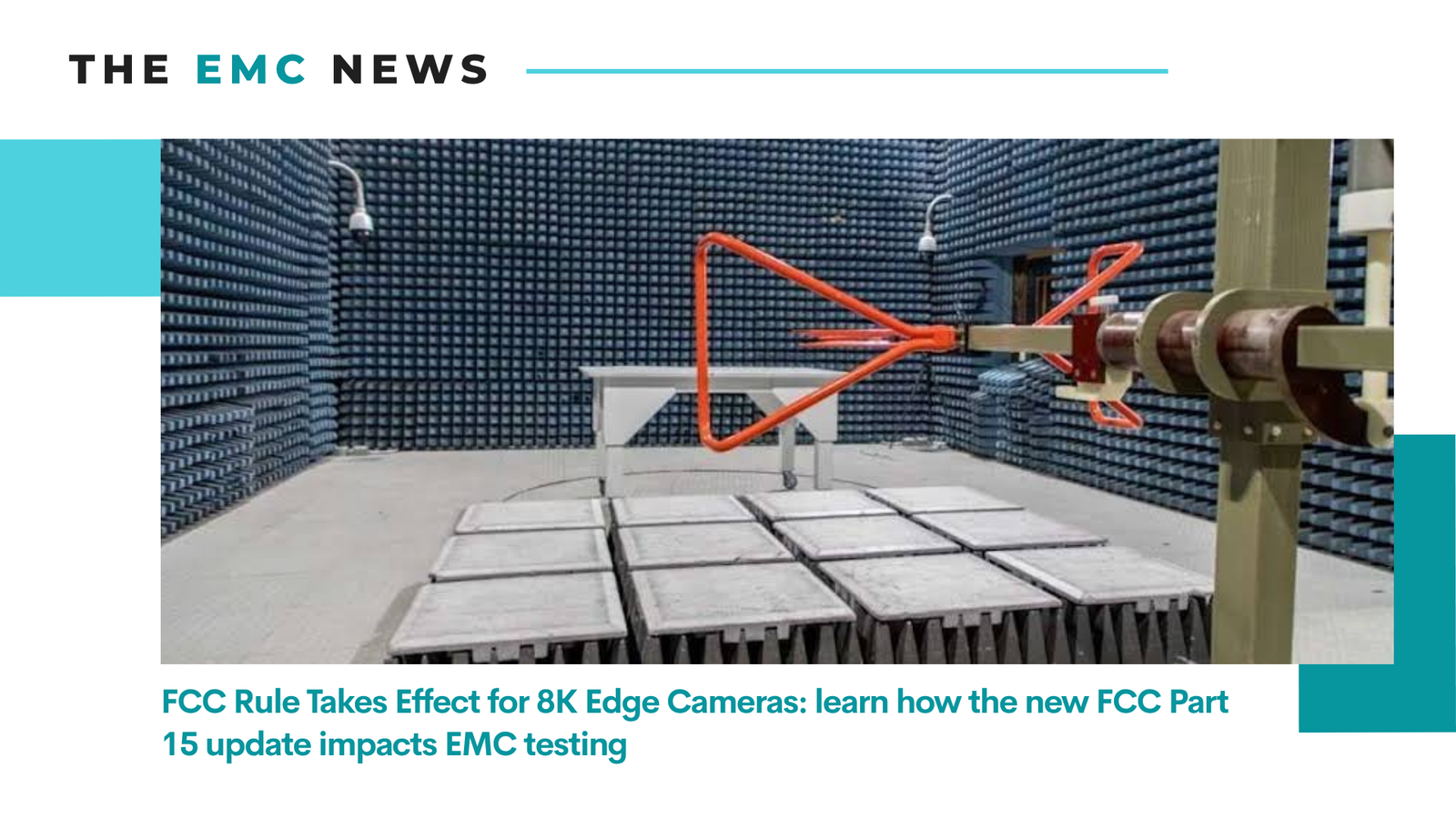
FCC Rule Takes Effect for 8K Edge Cameras: learn how the new FCC Part 15 update impacts EMC testing, CBP customs clearance, delivery timelines, and compliance costs for U.S.-bound shipments.
On August 5, 2026, the U.S. Federal Communications Commission put a revised FCC Part 15 Subpart E rule into force for 8K AI edge cameras shipped to the U.S. market, making enhanced radio-frequency electromagnetic compatibility testing mandatory and adding transient radiation limits for high-frequency image processing modules. For exporters, manufacturers, compliance teams, and import-related supply chain partners, this matters because the rule is effective immediately and products without the required certification can be refused customs clearance by CBP, with direct implications for delivery timing and compliance cost.
What the rule now requires
The confirmed change is that, as of August 5, 2026, the FCC has formally implemented a revision to FCC Part 15 Subpart E. Under that revision, all 8K-resolution AI edge cameras exported to the United States must pass enhanced RF EMC testing. The rule also introduces transient radiation limits for high-frequency image processing modules. The certification requirement is mandatory from the effective date, and products that do not obtain certification will be denied customs clearance by CBP. The information provided also indicates that the measure directly affects the delivery cycle and compliance cost of leading Chinese security equipment manufacturers exporting to the U.S.
Where the pressure will appear first
Export programs tied to the U.S. market
From an industry perspective, direct exporters of 8K AI edge cameras are the first group likely to feel the impact because the requirement applies to products entering the U.S. market and takes effect immediately. The most exposed business steps are shipment planning, certification readiness, and customs-facing documentation. What deserves closer attention is whether current export batches are already aligned with the new testing requirement, since non-certified products face a clear clearance risk.
Manufacturing and product compliance coordination
Analysis shows that manufacturing enterprises, especially those shipping advanced camera products with high-frequency image processing modules, may face pressure around testing coordination and release schedules. The impact is likely to show up in pre-shipment validation, internal compliance review, and production-to-delivery timing. The practical issue is not only whether a product is designed for performance, but whether it can move through the required EMC process without delaying outbound delivery.
Supply chain and delivery support functions
Observably, supply chain service providers and teams handling export documentation, freight coordination, or customs preparation may also be affected because the rule links certification status directly to CBP clearance outcomes. The main concern in these functions is execution risk: a product may be commercially ready but still face interruption if certification evidence is incomplete or not synchronized with shipping arrangements.
Buyers and channel-side planning
For procurement teams, channel partners, and downstream business counterparties serving the U.S. market, the likely effect is less about product availability in general and more about lead-time certainty. What deserves closer attention is whether suppliers can confirm compliant shipment schedules and whether quoted delivery windows still reflect the added certification step and possible cost changes.
What companies should track now
Immediate certification status of relevant models
For companies with 8K AI edge camera products bound for the U.S., the first practical priority is to distinguish clearly between models already covered by compliant testing and those that are not. Because the rule is already in force, this is not only a regulatory question but also a shipment release question tied to customs outcomes.
The scope of modules affected in real shipments
Analysis shows that the newly added transient radiation limits for high-frequency image processing modules deserve focused review in product-level compliance checks. Companies should pay particular attention to which shipped configurations, variants, or hardware combinations fall within the affected category, since business exposure may emerge at the model and module level rather than in broad portfolio terms.
Delivery commitments and customer communication
What deserves closer attention is the gap between a policy requirement and the operational ability to fulfill contracts on time. Exporters and account teams should watch delivery commitments, certification document readiness, and customer-facing timeline communication closely, especially where products are already scheduled for U.S.-bound shipment.
Ongoing rule language and implementation clarity
Observably, companies should continue to monitor whether there are further official clarifications, implementation notes, or related updates that affect how the rule is applied in practice. In this type of compliance change, the distinction between the published requirement and day-to-day execution details can shape both cost and delivery risk.
Why this reads as more than a one-day compliance notice
Analysis shows that this development should not be read only as a procedural update. The immediate legal effect and the explicit CBP clearance consequence indicate a direct operational threshold for U.S.-bound 8K AI edge camera trade. At the same time, it is more appropriate to understand this as both a short-term execution issue and a longer-term compliance signal: short term because shipment timing and cost may change right away, and longer term because the rule targets a specific technical area within advanced camera hardware. Even so, further observation is still necessary because the provided information does not establish how broadly manufacturers have already adjusted product compliance workflows.
How the market should interpret this stage
At this stage, the most grounded reading is that the FCC rule has already created a concrete compliance gate for 8K AI edge cameras entering the U.S. market. The immediate effect is practical rather than theoretical, particularly for exporters and manufacturers managing active delivery schedules. From an industry perspective, this is best understood as an implemented regulatory change with near-term business consequences, while its broader structural impact on product planning, export rhythm, and cost management still requires continued observation.
Basis of this article and what still needs verification
This article is based on the user-provided news title, event date, and event summary concerning the FCC rule taking effect on August 5, 2026 for 8K AI edge cameras and the associated EMC certification requirement. For developments of this kind, the source types typically relevant to verification may include official regulatory notices, corporate disclosures, industry association updates, authoritative media reporting, and standards-related documents. A specific official source link was not provided in the input, so the precise published document path and any subsequent implementation clarification still need ongoing verification. Follow-up attention should remain on official wording updates, certification execution details, and any further clarification affecting customs clearance and delivery arrangements.